In the past decade, the gaming world has seen incredible highs and some truly abysmal lows. This article shines a light on the latter, the most notorious video game flops from 2015 to 2025. These are the titles that earned universal groans, facepalms, or outright laughter for just how bad they were. Before jumping into the hall of shame, let’s lay out the criteria for what makes a game one of the “worst of the decade.”
Criteria for “Worst of the Decade” Selection
When picking the worst games of 2015–2025, we focused on titles that strongly signaled their awfulness across multiple areas:
- Abysmal Critical Reception: Games panned by critics, often reflected in rock-bottom Metacritic scores or 1/10-style reviews. (If nearly every reviewer says “avoid at all costs,” that’s a big red flag.)
- Player Backlash: A flood of negative player feedback, from review-bombing to refund demands. If the gaming community collectively revolts, downvoting comments into oblivion or petitioning for refunds, it’s a sign of true infamy.
- Technical Disasters: Glitches, bugs, and performance issues so severe that they dominate the experience. Think games that ship literally unfinished or unplayable without massive patches, or ones that become memes for their buggy chaos.
- Broken Promises & Hype Failures: Titles that rode a hype train to the moon only to deliver far less than promised. Missing features, downgraded graphics, “it’s nothing like the trailer!” — if gamers felt duped, the game earned a spot here.
- Poor Design and Concepts: Beyond bugs, some games are just badly designed — boring or frustrating gameplay, nonsensical story, or concepts that leave everyone asking “why does this even exist?”
- Controversies & PR Nightmares: Sometimes a game isn’t just bad in isolation — it influences the industry for the worse or sparks wider outrage. Greedy monetization (hello, loot boxes), tone-deaf decisions, or scandalous content can turn a game into a punching bag and cautionary tale.
- Lasting Notoriety: Finally, we’re looking at games whose badness was so notable that they’re still remembered years later. These aren’t your run-of-the-mill mediocre titles; these are the spectacular failures that have become legends (for all the wrong reasons).
With those criteria in mind, let’s count down (in chronological order) the worst video games of 2015–2025. Each of these games serves as an example of what not to do and in some cases, they’re downright amusing in their failure.
Tony Hawk’s Pro Skater 5 (2015) — A Legendary Series Wipes Out
The Tony Hawk franchise was once the king of skateboarding games — until Pro Skater 5 faceplanted hard. Released in 2015, this game felt unfinished and rushed, and there’s a good reason for that. Activision’s licensing deal with Tony Hawk was about to expire in late 2015, so they sprinted to push this game out the door in time. The result? A $60 title that barely worked, the physical disc contained almost nothing but the tutorial and a skate park creator, and players had to download a massive day-one patch just to access the rest of the game. Even with the patch, THPS5 was plagued with technical issues: choppy performance, bugs that sent skaters clipping through environments, and physics so wonky it felt like the skateboard was possessed.
Critics absolutely trashed the game’s dull levels and myriad problems. IGN gave it a measly 3.5/10, saying nostalgic fun was drowned out by “poorly thought out levels, control problems, bugs” and marveling that “a $60 game in 2015 can be riddled with so many technical issues.” GameSpot was no kinder, scoring it 3/10 and warning that you’d have to ignore “a plethora of obvious issues to find the smallest amount of fun.” Polygon outright named Tony Hawk 5 one of the worst games of 2015, calling it “so broken, so garish and so grim” that it made fans regret ever asking for another sequel. In short, this supposed revival of a beloved series turned out to be a half-baked disaster. It not only skated straight into our worst-of-decade list, it effectively killed the franchise for years (until a far better remake of the older games came along later to heal the pain).
No Man’s Sky (2016) — Infinite Universe, Infinite Disappointment (At First)
No Man’s Sky will go down in history as a lesson in hype control. The concept sounded amazing: an indie team (Hello Games) promised a literally galaxy-sized game, 18 quintillion unique planets generated by algorithms, a vast universe to explore, and even multiplayer encounters in this endless space sandbox. The hype exploded, especially after Sony backed the project and promoted it heavily. By launch in August 2016, expectations were through the roof… and that roof promptly collapsed. Early players discovered that many of the promised features were missing, most infamously, the game had no multiplayer at launch despite the developer’s earlier hints. Features shown in flashy pre-release demos (massive space battles, diverse creature behaviors, etc.) were nowhere to be found. Instead, players found themselves doing repetitive resource grinding on planets that, despite the astronomical scale, felt surprisingly samey after a while.
The backlash was swift and brutal. While some critics gave mixed or decent reviews, player reviews were overwhelmingly negative. Many felt misled by the marketing — this wasn’t the limitless sci-fi adventure they were sold. To make matters worse, the developers went radio-silent at launch, offering few explanations or apologies initially. This only fueled gamers’ anger, as it seemed Hello Games had “gone dark” after cashing in on everyone’s $60. No Man’s Sky became a punching bag in 2016, cited as a prime example of overpromising and underdelivering.
Now, to their credit, Hello Games spent the next few years redeeming this title, today No Man’s Sky is drastically improved with updates that added base-building, true multiplayer, VR support, and more. By its five-year anniversary, player sentiment swung to mostly positive, proving a comeback is possible. But we can’t forget just how spectacularly disappointing the launch was. In 2016, No Man’s Sky didn’t just drop players into a universe of empty planets, it itself became the barren planet upon which gamers heaped their scorn.
Star Wars Battlefront II (2017) — The Loot Box Fiasco Awakens
You’d think a Star Wars game would only make headlines for lightsabers and epic battles, but in 2017 Battlefront II managed to become famous (or infamous) for something far less fun: loot boxes. This online shooter from EA sparked perhaps the largest controversy over in-game monetization ever. The game itself was visually stunning and technically sound; the real problem was its greedy progression system. Key playable characters like Luke Skywalker and Darth Vader were locked behind either insane gameplay grinds or pay-to-win loot boxes. One calculation showed it could take 40+ hours of gameplay to unlock just one hero like Vader unless you paid extra. Essentially, Battlefront II was asking full-price buyers to either fork over more cash or slog for dozens of hours to enjoy iconic Star Wars content, turning the Force into a wallet force choke.
The gaming community’s reaction was volcanic. On Reddit, an EA community manager’s attempt to defend the design blew up in their face. EA claimed “the intent is to provide players with a sense of pride and accomplishment” in unlocking heroes through grinding, a phrase so absurd in context that it instantly became meme fuel. That Reddit comment went down in history as the most downvoted comment ever, with over 280,000 downvotes from furious players. The outcry grew so bad that EA hastily turned off all microtransactions just before launch to quell the backlash.
Even after patching the economy, the damage was done. Battlefront II became a poster child for corporate greed. More importantly, EA’s stock value reportedly dropped by $3 billion within a week of launch, attributed to the backlash. Governments around the world took notice too, using Battlefront II as Exhibit A in debates about whether loot boxes constitute gambling.
Fallout 76 (2018) — Buggy Bethesda and the Canvas Bag of Shame
Take a beloved single-player RPG series, strip out the NPCs, add multiplayer, sprinkle in countless bugs, and finish it off with some tone-deaf marketing — that recipe gives you Fallout 76. This was Bethesda’s attempt in 2018 to turn its famed Fallout franchise into an online shared-world experience. Unfortunately, it launched as a post-apocalyptic mess (and not in the intentional lore way). Technically, the game was a wreck: it shipped with a huge number of bugs and glitches, even by Bethesda standards, and patches often re-introduced old bugs on top of new ones.
Beyond the technical fiasco, Fallout 76 was panned for content and design issues. The world felt empty, literally, as there were no human NPC characters at launch, a bizarre choice that left storytelling to audio logs and robots. The core gameplay loop (scavenging and base-building) became monotonous without the rich narratives Fallout fans expected. And then came the controversies. Bethesda tried to sell overpriced cosmetics and even pay-to-win items in the in-game store despite earlier promises not to do so. Perhaps most emblematic was the canvas bag debacle: the $200 Collector’s Edition advertised a fancy canvas duffel bag, but players received a cheap nylon one instead, prompting outrage and accusations of false advertising.
The reception was so bad that even Bethesda’s top brass acknowledged it. Executive producer Todd Howard admitted, “When [Fallout 76] launched, the litany of issues we had, we let a lot of people down. There was very little we didn’t screw up, honestly.” That pretty much sums it up.
Anthem (2019) — The Anthem That Fell Flat
Bioware’s Anthem was supposed to be a rousing sci-fi song of victory, instead, it turned out more like an off-key dirge for the once-renowned RPG studio. Released in early 2019, Anthem was a big-budget online multiplayer shooter where you fly around in mech suits (a cool concept on paper). But it quickly became clear that Anthem was severely undercooked. Despite a lengthy development cycle, insiders later revealed the game was essentially cobbled together in the last 15–18 months due to mismanagement and reboots during development.
The final product felt empty and repetitive: a thin story, forgettable characters, and a shallow loot system in a game entirely about grinding for loot. Players grew bored quickly after hitting the level cap, as there was virtually no endgame content — a death knell for a “live service” looter shooter. Bioware did pledge to overhaul the game in a project dubbed “Anthem Next,” hoping for a No Man’s Sky-style comeback, but after a year of silence, even that was cancelled. By 2021, EA threw in the towel — they announced they would stop all new development on Anthem, essentially admitting defeat.
WWE 2K20 (2019) — Glitches, Gremlins, and a Royal Rumble of Bugs
By late 2019, gamers thought they’d seen buggy releases — and then WWE 2K20 came out swinging, or rather flailing. This professional wrestling game became a punchline almost immediately due to its hilariously awful technical state. Characters’ bodies would distort into inhuman shapes — wrestlers randomly turned into faceless, hairless skeletons or “quivering piles of geometry meat” due to grotesque animation bugs. Physics went haywire: some moves sent fighters flying or rings collapsing in absurd ways. These glitches weren’t just rare one-offs; they were constant, making every match a potential comedy routine.
To make matters worse, when the calendar hit January 1, 2020, WWE 2K20 suffered a Y2K-style meltdown. An internal date bug meant that as soon as the year 2020 arrived, the game completely crashed whenever you tried to play certain modes — effectively locking players out of the game at New Year’s midnight. The debacle was so bad that the publisher canceled the planned WWE 2K21 installment to give the developers a full extra year to get their act together.
Cyberpunk 2077 (2020) — Night City’s Bright Lights, Dim Launch
No game this decade had a hype-to-disappointment ratio quite like Cyberpunk 2077. Coming from CD Projekt Red (the revered studio behind The Witcher 3), Cyberpunk 2077 had years of anticipation and marketing. Keanu Reeves on stage at E3 yelling “You’re breathtaking!”, flashy trailers, promises of a sprawling futuristic RPG — it was poised to define the generation. And when it finally released in December 2020… oh boy. On a high-end PC, the game showed glimmers of greatness (hence some decent initial reviews). But on PlayStation 4 and Xbox One where millions of people played it — Cyberpunk was practically broken.
The backlash was immediate and immense. Within days, social media was flooded with glitch videos and refund requests. Under pressure, both Sony and Microsoft offered full refunds — an almost unheard-of concession for a major title. In fact, Sony went so far as to pull Cyberpunk 2077 from the PlayStation Store entirely just a week after release, a move that stunned everyone. It didn’t return to Sony’s store until half a year later, after some major patches. To CDPR’s credit, they did work hard post-launch to improve Cyberpunk, but that doesn’t erase the memory of its botched debut.
Grand Theft Auto: The Trilogy Definitive Edition (2021) — Definitely Not So Definitive
How do you make three of the greatest games of all time into one of the worst releases of the decade? GTA Trilogy Definitive Edition showed us how. In 2021, Rockstar Games (or rather, the small studio they tasked) took Grand Theft Auto III, Vice City, and San Andreas — absolute classics — and attempted to remaster them for modern platforms. It should have been an easy win. Instead, what players got felt like a rushed, sloppy mobile port wearing a cheap coat of paint.
Character models were bizarrely altered — some beloved characters now looked like bootleg action figures of themselves, with goofy proportions and expressions. Numerous textual errors on in-game signs (due to AI upscaling gone wrong) turned intended jokes into gibberish. The Trilogy DE’s user score on Metacritic plunged to an astounding 0.4/10 at one point, among the lowest ever recorded. Rockstar eventually issued a public apology, admitting the games “did not launch in a state that meets our standards of quality.”
The Lord of the Rings: Gollum (2023) — One Game to Cringe at, Precious
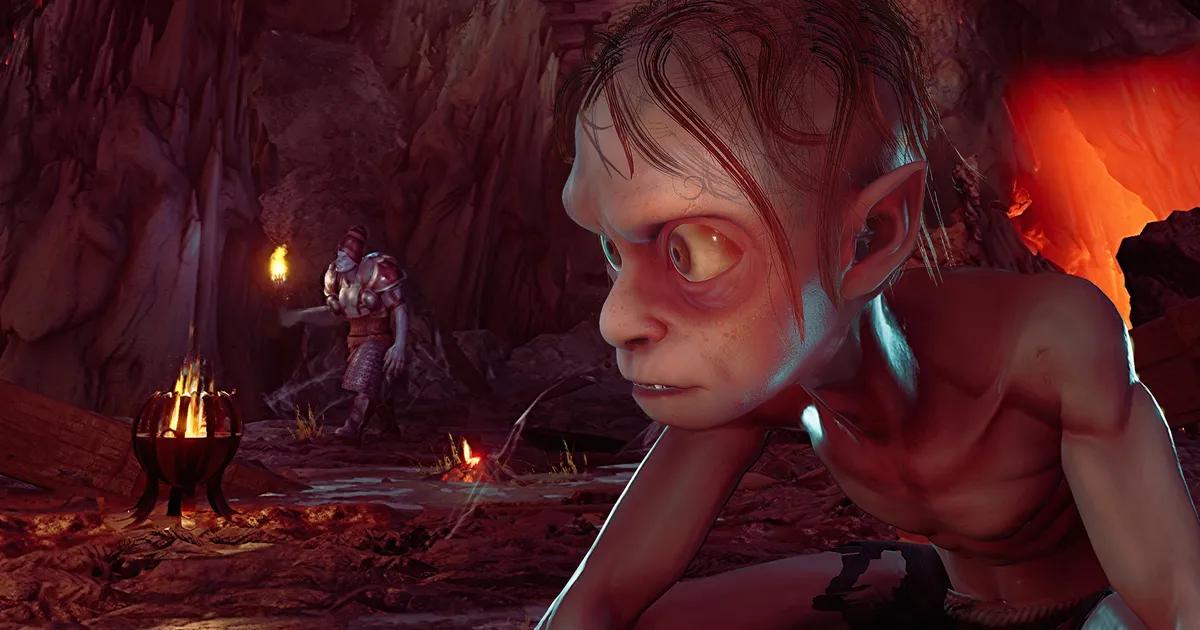
In 2023, a game emerged from the depths of Mount Doom (or perhaps the depths of baffling game design) — The Lord of the Rings: Gollum. The premise alone raised eyebrows: you play as Gollum, the emaciated, schizophrenic hobbit-creature, sneaking around Middle-earth in a timeline that mostly doesn’t involve key LOTR events. Spoiler: it was not done well. Upon release, it earned “generally unfavorable” reviews across the board, ranking among the lowest-rated games of 2023. Critics and players alike slammed the fundamental gameplay — a stealth platformer with clunky controls and sluggish mechanics.
The fallout didn’t end with reviews: within weeks, reports came that Daedalic was getting out of the development business entirely, canceling a planned second LOTR game and laying off staff. Gollum essentially cratered the whole studio’s ambitions.
Redfall (2023) — Bite Me, Please
2023 struck again with another high-profile flop: Redfall. If Gollum showed how a small studio can fumble a beloved IP, Redfall showed that even big studios with pedigrees (in this case Arkane, of Dishonored fame, under Bethesda) can drop the ball and the stake. Redfall was pitched as an open-world co-op shooter where you fight vampires in a quaint island town. Sounds cool, especially coming from Arkane, known for creative gameplay and rich immersive sims. But when Redfall launched, players quickly realized that instead of a sharp, vibrant experience, they’d gotten a lifeless husk.
The reception was overwhelmingly negative, a rare misfire for Arkane. It scored in the high 50s on Metacritic — “mediocre” territory that was far below expectations. It was such a black eye that Xbox’s own boss Phil Spencer publicly apologized for the game’s quality, calling its launch “disappointing” and taking full responsibility.
Final Thoughts
From 2015 to 2025, we’ve witnessed some spectacular gaming faceplants. Each of the titles above failed in unique ways — from technical incompetence and broken promises to ill-conceived ideas and greedy monetization. Yet, in a strange way, these disasters are valuable: they offer lessons for developers and cautionary tales for players. Whether it’s Tony Hawk 5’s rushed release or Cyberpunk 2077’s hype burnout, each reminds us that making a great game is hard, and making a legendarily bad game is unfortunately all too easy when oversight falters.
As much as we roast these worst games of the decade, many of them have a silver lining — some were improved post-launch, some spurred industry change (e.g., loot box regulations after Battlefront II), and others at least gave us a good laugh. If nothing else, they made us appreciate the good games all the more.